Tokenization of Real-World Assets
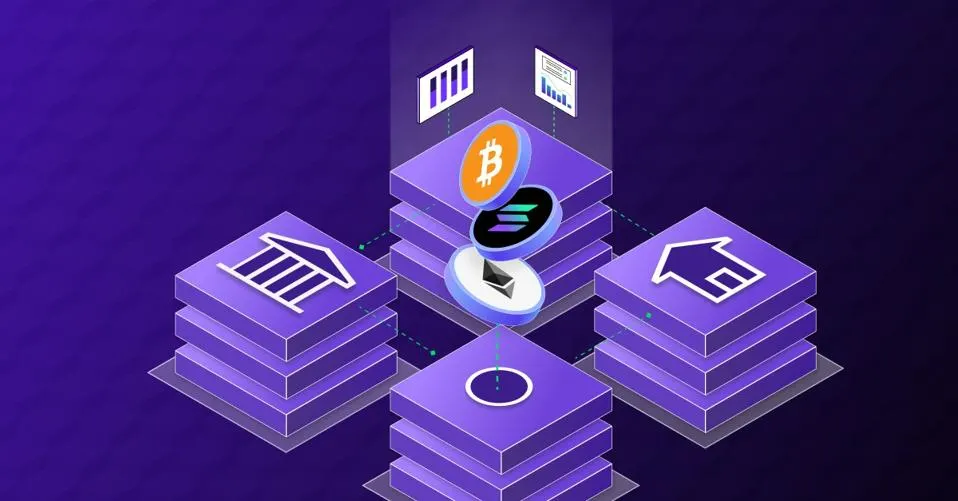
Tokenization of Real Assets-a process whereby some ingenious application of blockchain technology is used to represent real-life physical and tangible assets in some digitized form. The process amplifies liquidity and accessibility but also new forms of fractional ownership, whereby high-value assets can become more accessible to invest in by both individuals and institutions alike.
Tokenization is an idea in which any asset can be symbolized with a digital token; to their own terms, this means a kind of digital certificate of ownership. These tokens exist on a decentralized and secure blockchain, allowing transparency and making tampering impossible. A token can be attached to an asset; ownership of the token reflects ownership in an asset, entirely or even only partially. In this process, assets ranging from real estate, art, commodities, to even shares of a company are going to be digitally tokenized on a blockchain in a complete overhaul of ownership, trading, and asset management. This opens up a whole new world of asset management and investments because at this point, many of the assets that were out of bounds for most investors have been democratized.
One of the largest advantages relates to tokenization bringing a greater degree of liquidity to traditionally illiquid markets. Real estate and works of art are but two classes of assets whose sales are notoriously slow, for a number of reasons, including the large capital required in order to invest in them and the involved procedures. Tokenization solves this problem, as these assets can now be fractioned into smaller parts or "fractions," with each fraction digitally recorded into a token that could be bought or sold or freely traded on digital marketplaces with extreme ease. The fractional ownership economic model has a dual advantage: it reduces the entry barriers of investors and increases the liquidity of the asset value by making selling a part easier compared to selling the whole.
Another critical advantage lies in gain of access. Most traditional models of investment lock high-value assets that were available only to very richly capitalized individuals or institutional investors. Tokenization now changes all that, and with it, the smallest of investors are in a position to participate in markets that were impossible before. In other words, though millions might have been needed to invest in a luxury property, through tokens, one can buy a small fraction of that particular property, therefore making high-value investment options more inclusive and widespread. This kind of democratization in investment opportunities does have the potential to change the face of finance, allowing for better distribution of wealth and greater economic participation.
Another separate yet positive aspect of tokenization is its inherent blockchain technology, whereby security and transparency are guaranteed. Since blockchain works on a distributed network, nobody has control over the data; hence, fraud or tampering with it is practically impossible. The reason this is important: Because all token transactions are registered on the blockchain, it creates an open record of ownership that can't be tampered with. Once again, allow me to repeat: This is much more valuable in markets where trust and verification need to occur, such as those for real estate and fine art. Thus, the buyer will be a lot more confident in the veracity of an asset's ownership history, and disputes can be prevented, enhancing integrity within the greater marketplace.
Besides security and transparency, the tokenization of an asset could also streamline the transactional process involved and reduce transaction costs. Traditional transactions of buying and selling assets usually have a lot of middlemen in their dealings: brokers, banks, and legal representation, to just name a few. They make the process so much longer and expensive. With tokenization, you get to sell directly on the blockchain, reducing the need for most of these middlemen dramatically. Smart contracts are self-executing contracts in which the rules of an agreement—with, in simple terms, the 'deal' between the buyer and the seller—are directly written in lines of code. This realization in further automating processes makes sure that transactions occur smoothly, speedily, and with as little human input as possible.